Why Choose a Montessori Education?
As parents, we strive for the best educational experiences for our children. Montessori prepares your child for future success by equipping them with the skills they need to thrive in a constantly changing world. TIMES Montessori offers an exceptionally individualized learning experience that meets where your child is now and guides them to where they want to be.
The Montessori method is a smart approach to education that engages children's natural ability to learn and grow when given the right environment. From academic readiness to developing strong and meaningful social skills, Montessori provides your child with a foundation to thrive on.
Why do Parents choose a Montessori Education?
Parents choose Montessori for their kids because of its focus on:
1
Individualized learning
Montessori education understands that each child is unique and learns independently. The curriculum caters to your child's learning styles, allowing them to explore their interests, learn at their own pace, and develop their strengths.
2
Mixed-age groups
Older children guide and support younger students through peer learning, enhancing their leadership skills and collaboration.
3
Self-guided learning
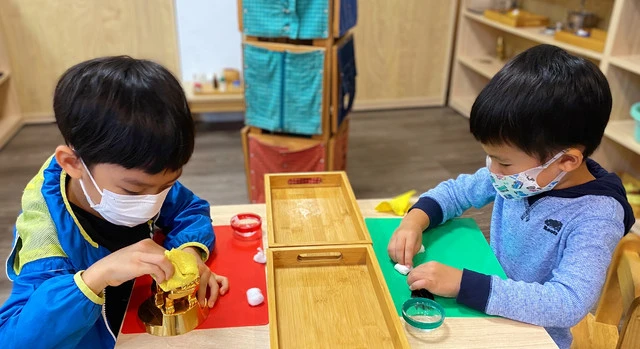
Your child chooses their own learning activities and develops independence. This fosters autonomy, confidence, and self-reliance.
4
Inspiring classrooms
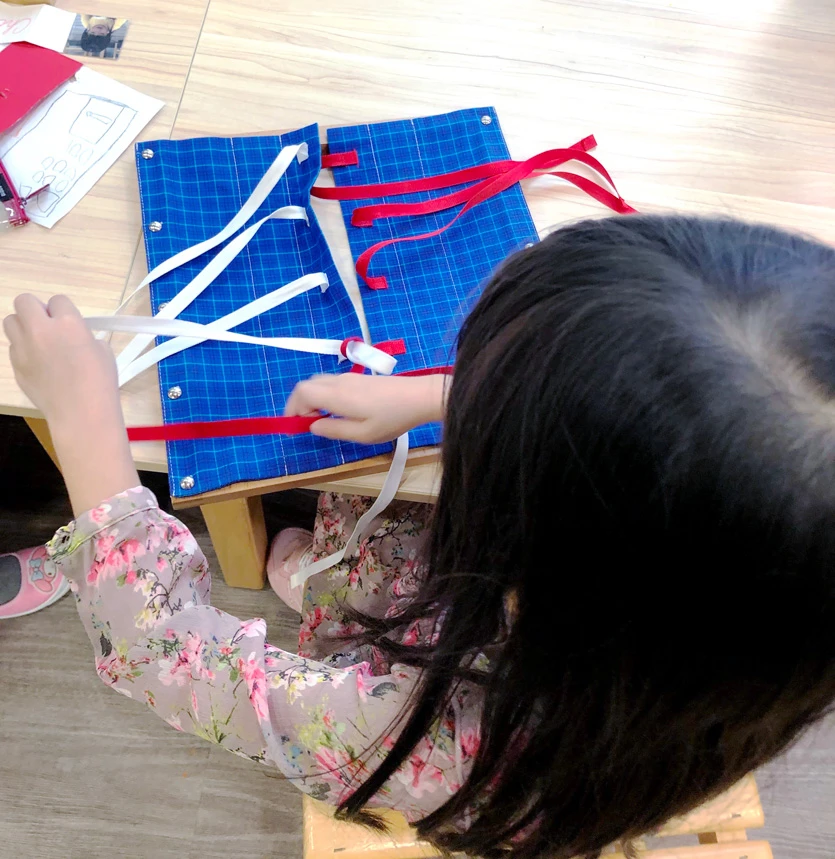
Montessori classrooms are intentionally prepared to be serene, organized, and inviting. With child-sized materials, learners foster a love of learning with cozy corners for solo projects and group-friendly spaces.
5
Personal development
In a child-centered classroom, your child takes charge of their learning and becomes adept at recognizing and correcting their mistakes.
Free the child's potential, and you will transform him into the world.
Montessori vs. Traditional Education
Montessori education emphasizes child-centered, experiential learning and development, while traditional education focuses on teacher-directed, content-based instruction. Here are the main differences:
Montessori Education | Traditional Education |
Child-led, natural development | Curriculum-driven, standardized approach |
Children learn at their own pace and follow their interests | Learning follows a uniform rate and curriculum for all students |
Child-guided, prepared materials | Teacher-directed lessons |
Active learning: Collaboration between teacher and child | Passive learning: Teacher-led instruction |
Experiential understanding | Subject-based, limited scope |
Experiential learning: Movement and physical exploration are linked to learning | Desk-bound: learning occurs at tables with whiteboards and worksheets |
Flexible workspaces: Children can work where they are comfortable, move around and talk at will while not disturbing others | Assigned seating: Children are usually assigned their own chair and encouraged to sit still and listen during group sessions |
Holistic growth: intellectual, social, emotional, spiritual | Primary focus is on intellectual growth |
Integrated learning: academic, social, practical, and life skills | Subject-based learning: Emphasis on academics |
Flexible, comfortable environments | Structured, assigned seating |
Internal self-discipline | Teacher-enforced discipline |
Intrinsic motivation: The child's development brings its own reward and motivation | Extrinsic motivation: reward and punishment systems |
Uninterrupted work cycles | Scheduled block time and period lessons |
Children work on a project as long as desired | Time-limited work assignments |
Mixed-age groups | Same-age groups |
Learning tailored to a child's social development | Learning with limited focus on a child's social development |
Montessori education fosters independence and creates self-starters who grow through their own effort. Your child learns that they're capable of meaningful achievements and genuine understanding. Montessori nurtures children who confidently explore the world, build a character to be proud of, and chart their own path toward success and happiness in the real world.